
Category

Uncategorized

Globe of the world

Culture Shock: A Foreign Affair

By UncategorizedNo Comments

With students from over 70 countries studying at the University of Nevada, Reno, the campus is often coined as being diverse, filled with ideas from people from all over the world. With help from the University Studies Abroad Consortium, or USAC, many UNR students find themselves in exciting new places with new ideologies, cultures, and experiences at their fingertips. So, how does the culture shock of foreign students traveling to America differ from American students traveling abroad?

GlobeFirstly, one may ask, what is American culture?

“Americans are hard workers,” said Kendall Perry, an American-born journalism student at UNR. “American culture certainly can get a bad wrap, but when it comes down to it, we have come far as a nation to work hard and accept one another. I know we’re not there yet, but we may be on the right path. We celebrate everything, we laugh a lot, and we are happy people.”

Yet, American culture can also be associated with more negative connotations.

“American culture is depicted as unhealthiness, selfishness, and general racism,” one political science major said, “The entire nation was built upon the disrespect of the earth, taking of things that weren’t theirs, inequality to the highest degree, and religion.”

As the American experience differs for each individual, similarities are voiced by many of the students studying here from other countries.

Noris Buitrago is a senior studying at the University of Nevada, Reno. After traveling to the United States for her studies, she found stark differences between beauty expectations between American women and the women of her home country of Panama.

“I think beauty and attractiveness mean something a little different in my country,” Buitrago said. “Beauty is also accompanied by intellectual knowledge and good qualities. Women are not focused on television, flashing at them on commercials or appearing on magazines or catalogues. If a woman is physically attractive but also profesional, she will definitely get a lot of attention.”

Yet, this cultural divide is further explained when clothing is brought into the scene. As fashion is a major staple to each culture, the shock in arriving in a new place can be overwhelming depending on the severity in which one feels the difference is from their native land.

“Most of Americans are really open minded,” Buitrago said, “We are a little more modest. But you know, it is part of expressing their self and culture, and we all have to respect that.”

However, there is a significant amount of pressure to adapt to a new culture once stepping foot inside its realm. With some adaptations being seen as appropriation and others being seen as stripping oneself of one’s own roots, is there a balance that can be found?

Zoe Fitch is a student at UNR from Guernsey, one of the Channel Islands in the English Channel and a self-governing British Crown dependency. Fitch is often found in the gym or on the track as one of the most successful international student track and field athletes in UNR’s history. She, too, found significant changes in women’s beauty routines, fashion choices, and overall expectations of beauty and success. However, these standards, mixed with culture shock in general, never phased her.

“I don’t think you should ever feel pressured to adapt to a new culture,” Fitch said, “If you change your style and beauty regime it should be because you want to, not because someone told you that you should. People should accept you the way you are, especially if you are an incomer and unique.”

Indeed, USAC does everything in their power to prepare their students for the kind of challenges they will meet before they even begin to pack. With available resources being “Culture Shock and Immersion” and even “Tips for Cultural Adjustment for Parents of Study Abroad Students”, programs are in place to help their American students feel the most prepared when traveling abroad.

During the USAC orientation in October of 2017, examples were shown to elucidate differences in what may be shocking to one person and normal to another. One point illustrated that Thai culture often works around issues, whereas American culture goes headfirst into a problem, both yielding different but equally successful solutions. In addition, one student who traveled to Italy for a summer said a large culture shock for her was when she discovered that most Italians do not use a dryer, but rather, hang their clothes on a line to dry. In contrast, one student from Afghanistan quipped that she was shocked she could speak to a man whilst looking him in the eye in America.

Globe in Hand

“Sometimes culture shock is not so and can be just discrimination or prejudice,” said Merle Ocampo, a successful nurse originally from Hernani, Philippines. “In healthcare, I was the only Filipino, and just because you were the only brown kid they thought you didn’t know anything. Now, people will say, ‘May I talk to the supervisor?’ I say, ‘I am the supervisor.’”

With the Office of International Students and Scholars reporting that students from six different continents are currently studying at UNR, many feel campus life is becoming more diverse as the years pass.

“It is important to remember, above all things, respect,” said Chen Wei, a second-year geology student from Beijing, China. “You don’t have to adapt or not adapt, just feel the soil you stand on and the blood in your veins. The balance will find you.”

Woman on bed

Awaken Reno Aims to End Sex Trafficking

By UncategorizedNo Comments

From the grocery store slot machines to the brothels and strip clubs, Nevada is a state known for its somewhat immoral nature.  USA Today and thestreet.com reported in 2014 that Nevada housed 265 active casinos. The state with the second highest number of casinos? Colorado, with 41. In many states, gambling is only allowed on boats or tribal land. According to statista.com the number of slot machines in Nevada was at 166,860 in 2017 and has been decreasing from a high of 213,800 since 2000.


Although prostitution is legal, many are unaware of the fact that illegal human trafficking is a serious problem here as well. One non-profit organization in Reno named Awaken is working to put an end to this issue while raising awareness in the community. As Melissa Holland, co-founder and executive director of Awaken, said, “We work to try to provide choice for women and escape for children from commercial sexual exploitation as well as educate the community and train professionals on how to work with this population.” Women and children can seek temporary shelter, case management, and other resources at the organization’s drop-in center and long-term assistance is also provided to those who need it.

In order to increase awareness in the community, members of the Awaken team hold presentations at local schools, recruit businesses in the area to support the cause, and train professionals to recognize the signs of sex trafficking so that they can work with victims appropriately.

Exactly how prevalent is sex trafficking in this area? Awaken partnered with CreightonUniversity last year to find out. After four months of monitoring one website used to buy and sell sex, they found that an average of 1,500 women and children are sold every month in the Reno/Tahoe area. According to Holland, the vast majority of these exchanges, about 900-1,000 of the 1,500, happen in Reno and Sparks. At awakenreno.org there is a map depicting these numbers and showing all the locations noted by the study. The page even cites specific locations such as the Reno-Tahoe airport and Circus-Circus hotel where these exchanges reportedly occur. Holland explained that the legalization of brothels in the state contributes to the high rate of illegal sex trafficking by increasing demand. She said, “when the demand goes up you need to increase supply and that will come in all illegal facets and legal facets as well, and the supply in this equation is women and girls.”

According to the Awaken website, the organization has helped over 250 women so far. This has been done through helping victims further their education, find jobs, receive case management, and find refuge at their drop-in center. They have also reached out to about 10,000 community members including 1,600 youth. On top of this they have been able to train more than 600 professionals to better serve those in need.

Part of their mission of increasing awareness has to do with changing the common mindset that the sex industry is not necessarily harmful. This spans from modern porn to sex trafficking which, as Holland said, “Actually pervades and permeates into the whole culture.” She went on to talk about the stereotypes many place on sex workers. While nearly everyone believes that the trafficking of minors is wrong and upsetting, once they come of age the perspective tends to change.

“People just need to really start to understand that word choice,” Holland said, “We’ve got some [victims] in their 50s, and yet their abuse also started when they were nine years old.We disconnect compassion and empathy at that shift of age. We start to look and assume choice and we often attach shame and judgment when we see them later in their years.” She also went on to add that the average prostitute enters the field at 14 years old.

Awaken has started a powerful movement in this community, but they cannot change the community alone. Luckily, everyone is capable of helping and contributing to this cause. First, we can all work to change our perception of sex workers. Many of them have been forced or coerced into the profession. Aside from this, there are plenty of other ways to get involved. By donating, volunteering, attending events, and even shopping Amazon Smile anyone interested in the cause can help. University students can also join, learn more about, or attend an event put on by Students to Abolish Sex Slavery, or SASS, a club on campus focused on fighting sex trafficking in the community.

“College students are phenomenal advocates,” Holland said, “They pick a subject and they go all in.” Through spreading the word and telling more people about this issue, we can all do our part to pitch in and make a difference.

a Camera, glasses, coins, laptop, succulent, coffee mug, and notebook on a white background

We Could Benefit from a Little Minimalism

By UncategorizedNo Comments

SimplicitySo, let’s start simple. What is minimalism? Minimalism is often characterized by the idea of living with very few possessions. It can often be seen in videos online of people with very little possessions. For example: one of each utensil, one bowl, a couple shirts and maybe two pairs of shoes.

Although that approach works wonderfully for some people, it isn’t always realistic for others. The core of minimalism is to put your values first and get rid of things you don’t need in your life. It often seems like these days many people believe money can buy you happiness. The more things you have the better your life will be. Keeping up on all the latest fashion trends, buying all the latest gadgets, swiping up all the latest makeup that comes on the shelves, with these you’ll find happiness.

Minimalism challenges the belief that money can buy you happiness by getting you to refocus your life around your values and appreciating your experiences and your relationships with others. Minimalism helps you declutter your life by taking away distractions you don’t need and replacing them with more deep and meaningful things. Anyone can benefit from a more minimalist lifestyle.

The Benefits of Minimalism

  1. More time By switching to a more minimalist lifestyle you will have more time to yourself. You don’t have to spend any extra time trying to find something you lost or spend so much time cleaning your room. By owning less, you don’t have to spend as much time cleaning and organizing. You’ll have more free time to do whatever you like and you’ll already know where everything is.
  2. Stress Reduction Less clutter means less stress. I’m sure you all can relate to how relaxing it is to come home to an organized and clean space. If you’re like me and live in a tiny apartment with limited space, it’s easy to understand how stressful it is to never have enough space for all your stuff. Living in such a small place has taught me to downsize and only keep things I really need.
  3. Save Money By switching to a more minimalist lifestyle you get to save a ton of money. Instead of going out and blowing all your money as soon as you get paid you can save your money for only essentials, such as replacing your old phone, maybe upgrading your TV, or putting it aside in savings. You get to spend your money on higher quality items. Not only can you save for better, more useful things, you can also save your money and put it towards experiences rather than objects. You can go try out that new restaurant you’ve been dying to try, or check out a concert that’s coming to town. You will have a lot more fun and more memorable moments when your money goes to experiences, not objects.
  4. Personal Growth Minimalism lets you have more time for things that matter to you. Less stuff means living a less stress filled life and more money means less financial stress. By refocusing your life around values, experiences, and relationships and less on physical objects you will learn to appreciate life so much more. There’s so much more to life than the latest and greatest items to buy. You will learn how experiences and personal connections with those around you can truly change your perspective on life. You will have great stories to tell and amazing people by your side.

minimalismHow to Achieve a More Minimalist Lifestyle

  1. Go through your closet One of the first and easiest steps you can do would be simply going through your closet. I know it’s tough to get rid of things, but try to be realistic with what you wear and what you don’t. Realistically you’ll hardly notice any of the things you never wore once they’re gone, and you’ll get more closet space. You could sell them and make a little extra cash on the side, or you can donate whatever clothes and shoes you decide to get rid of, and help someone in need.
  2. Go through your computer Minimalism can be brought to every aspect of your life, even your computer. If you haven’t, take the time to organize everything that’s on your computer. I suggest you give it a try. File, sort, and organize everything whether it’s for school, work, or personal, organize everything. You will feel so much better when every time you get on your computer you’re greeted with a clean, organized desktop. Even go through your emails and unsubscribe from all those pesky ads that just love to pop up. Also, uninstall apps or programs you never use that just take up space.
  3. Go through your household Besides just your room go through your kitchen, living room, bathroom, and even the laundry room. You can find there’s tons of things you don’t need scattered around the house. My biggest problem has always been coffee mugs. I just love coffee mugs, but realistically I don’t need 10 coffee mugs taking up a whole shelf in my already tiny kitchen. Even go through the pantry to see if there’s anything just sitting that can be tossed or donated. You’ll be looking at things and wonder why on earth you ever bothered to spend money on them.
  4. Make it a goal to save money After you’ve cleared the place, make it a goal to start saving money. Try to not waste your money on unnecessary things that way you can put your money towards experiences, or put it in your savings for later or even start an emergency fund. I mean who would complain about having more money.
  5. Make it a goal to change Besides just cleaning out the house and learning how to handle your money you need to make it a goal to change. A goal is to pay closer attention to the things that matter to you. Spend more time with people you care about, build stronger relationships. Work on building fond memories you can look back upon. Learning how to appreciate life is so important for overall happiness and well being. The point of this journey is to improve yourself and your overall happiness. Life is short, so we need to make the most of it.
Joe Hagan

Sticky Fingers Book Review

By UncategorizedNo Comments

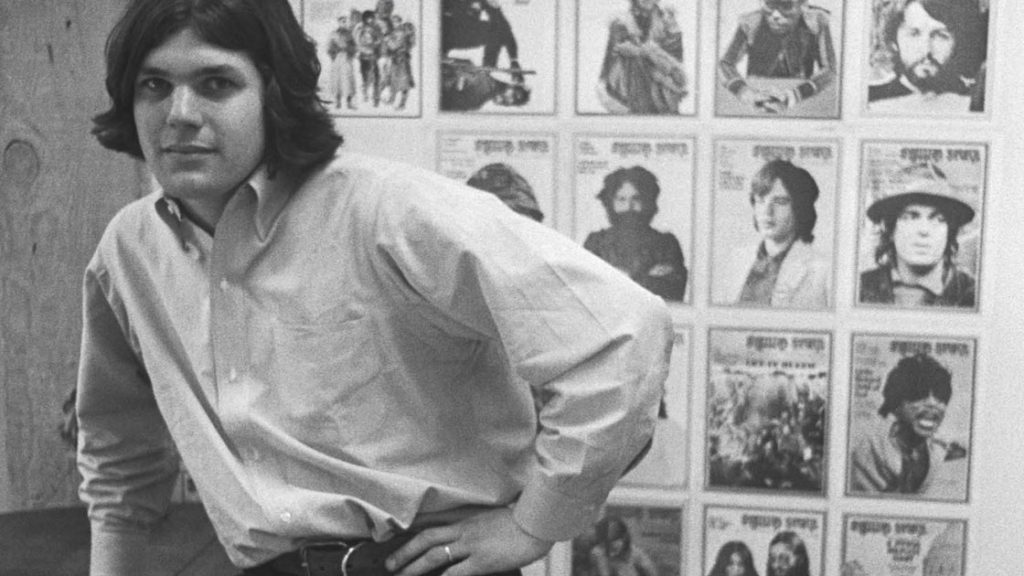
Sticky Fingers by Joe Hagan is a wonderfully written and thoroughly researched book on the life of Jann Wenner, Rolling Stone Magazine’s co-founder and editor-in-chief. Hagan tells the story of Wenner’s beginnings as a precocious child and student to a fame-hungry journalist and founder. Readers are granted an inside look into the zeitgeist of times and the last fifty years of the “counterculture bible” that is Rolling Stone. Hagan unapologetically explores the world of sex, drugs, and rock and roll in journalism and how that formula birthed Rolling Stone and made Wenner a household name. The uncensored biography is both inspiring and infuriating, objective and subjective, poetic and simple. It immerses the reader into a life that should be both admired and critiqued. Sticky Fingers is must-read for journalism students because of Wenner’s impact on journalism and his mixing of pop culture and journalism. Rolling Stone Magazine fans and biography enthusiasts will also enjoy Wenner’s life story and the frenzy that is Rolling Stone and its history.

UNR's unique classes

UNR’s Unique and Unusual Classes

By UncategorizedNo Comments

Students at the University of Nevada, Reno focus on looking for classes to fulfill their core requirements when enrolling each semester. However, if students looked deeper into the class catalog, they would discover that UNR offers some unusual and unique classes.

Anthropology 420/620

The study of magic, witchcraft, and religion is one of the options that seems to go unnoticed when students sign up for classes. According to its syllabus, the course “is an overview of anthropological interpretations of and approaches to religion, magic, and witchcraft.” However, this does not include casting spells or creating potions.

The anthropology of religion is characterized primarily by looking at religion in practice. Students will study forms and meanings of religious practice using examples from many different cultural contexts. This includes (but is not limited to) a look at worldview, myth, ritual, spirit possession, religious practitioners and authority, gender, magic, witchcraft, and sorcery. Toward the end of the semester, students focus specifically on religion in the modern, global world.

Erin Stiles, professor for ANTH 420/620, has been teaching the course every spring semester since 2008. Originally from Utah, Stiles developed a passion for religion through her personal experiences.

“Growing up as a non-Mormon in a heavily LDS part of Utah, I was always interested in religion, and the intersections of religion and culture,” Stiles said, “So, I decided to focus on religion in anthropology.”

Although the name of the class sums up its focus, Stiles explains how the teachings have a deeper meaning to them.

“In ANTH 420, we use a variety of ethnographic case studies to explore the lived experience of religion among people around the world,” Stiles said, “I think my favorite part of ANTH 420 is teaching these case studies, and encouraging students to try to see the world from another’s point of view.”

Students may question how taking a class that revolves around magic, witchcraft, and religion will benefit them in the future. Stiles states that the course will expand students’ understandings of the diversity in the world.

“By exploring human cultural diversity through religion, I think students will be better able to understand and thrive in our increasingly diverse cultural environment,” Stiles says.

Students should take ANTH 420 if they are interested in studying religion as something that people do and experience.

CHS 605

Spirituality and Health: A student who is passionate about health and religion would enjoy this capstone course. Offered every fall, CHS 605 focuses on how spirituality (creating meaning of one’s life) can prevent or heal disease. Professor Mel Minarik states in the syllabus that the class “examines the issues, research, and personal experiences relating to health and spirituality from the preventive aspect of spiritual practices and to the healing aspects of spiritual practices.” Similarly to ANTH 420/620, students will look over a variety of religions and how their practices can lead to healing. Through this compelling course, students will benefit from learning how the connection between the mind and body can potentially heal one’s soul.

ECON 411

Economic and Social Aspects of Gambling: The City of Reno relies heavily on casinos to help boost its economy. In 1989, the University of Nevada, Reno established an institute for the Study of Gambling and Commercial Gaming. According to its website, the institute’s classes “aim to encourage and promote research and learning so that the multifaceted issues surrounding gambling and commercial gaming and the ways in which individuals and society-at-large are affected might be addressed.” In ECON 411, students will analyze topics related to gambling, such as game strategies, odds making, gambling behavior, economics of the gaming industry, and compulsive gambling.